Wholesale Distributors:
How Wholesale Distributors Are Plugging the Cash Flow Gaps Killing Their Growth
Read More →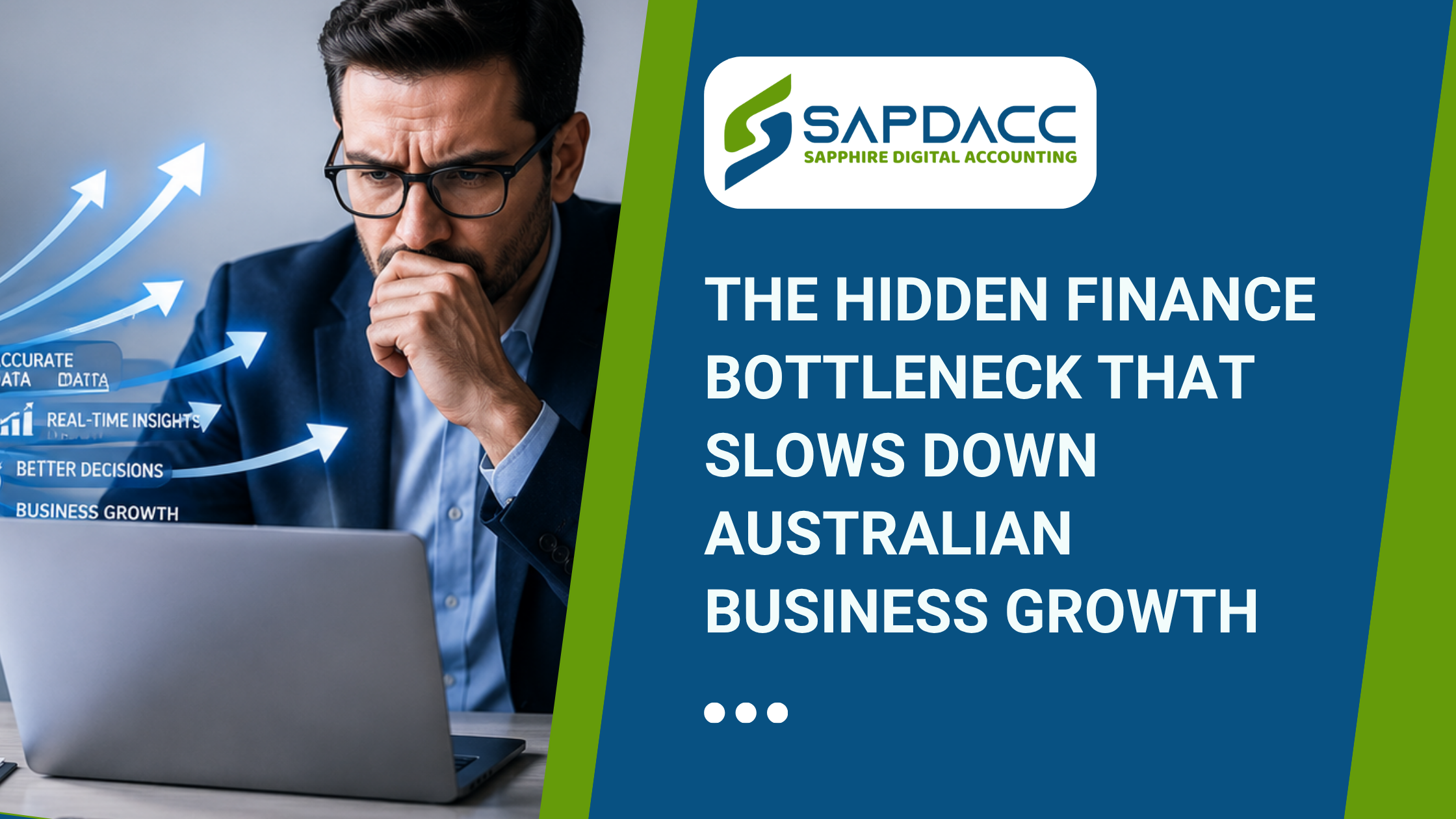
Most Australian SMEs don't hit a growth ceiling because sales stop. They hit it because finance can't keep up. The business gets busier, but reporting gets slower, cash becomes harder to predict, and month-end turns into a recurring scramble.
The hidden bottleneck is usually not your accounting software. It's the day-to-day finance execution behind the numbers—AR/AP, reconciliations, approvals, exceptions, and close routines.
When those foundations slip, visibility drops and decisions slow down.
When finance becomes the bottleneck, growth becomes harder to fund
As volume grows, small delays across finance operations compound quickly.
Common symptoms in growing Australian businesses:
Real-world impact:
The bottleneck is usually structural, not personal
Most finance teams are capable. They're just operating in a model that doesn't scale.
Processing happens when someone has time. Approvals sit in inboxes. Exceptions linger. The system contains data, but it isn't current enough to rely on.
Invoicing delays, unclear allocations, and inconsistent follow-up slow cash inflows. On the payables side, approvals and invoice processing delays make liabilities unclear. This is where AR AP outsourcing and outsourcing accounts payable can stabilise execution.
When reconciliations are delayed, month-end becomes a rescue exercise. Reporting then depends on late journals and corrections rather than clean, reconciled numbers.
As invoice volume rises, errors slip through—duplicates, mismatches, missing approvals, and incorrect coding. Over time, this creates leakage. Invoice auditing services reduce those avoidable costs.
More suppliers, customers, entities, systems, and reporting requirements. Hiring and training rarely keep pace, and knowledge concentrates in one person—creating people risk.
For businesses with stock movement and retailer requirements, inventory and order processing and EDI order processing accounting add additional exception points that can distort revenue timing and increase disputes.
Fix the bottleneck by stabilising finance execution
The fastest way to remove the bottleneck is to strengthen the daily finance engine and make month-end predictable.
A practical improvement plan typically includes:
Where outsourcing fits (structured, not disruptive)
For many Australian businesses, outsourcing becomes practical because it adds capacity and process discipline without changing systems.
Depending on what's breaking, this can include:
The result is a finance function that produces decision-ready numbers on time—without constant firefighting.
What improves when the bottleneck is removed
A growing Australian business increases sales but feels cash tightening. AR follow-ups are inconsistent, supplier approvals sit across inboxes, and reconciliations are left until late in the month. Reporting arrives after key decisions are already made.
By stabilising AR/AP cadence, introducing invoice checks and exception tracking, and completing monthly reconciliations, the business improves cash visibility and shortens month-end close—without changing systems or adding immediate headcount.
Sapphire Digital Accounting supports Australian SMEs and mid-sized businesses as an outsourced operational finance partner. We work within your existing systems to stabilise AR/AP workflows, reconciliations, month-end close readiness, and reporting—so the finance function supports growth rather than slowing it.
The hidden finance bottleneck isn't usually your software. It's inconsistent execution across the back office finance function. When AR/AP, invoice controls, reconciliations, and close routines aren't running to a steady rhythm, visibility drops and growth becomes harder to fund.
Fixing the bottleneck means building a repeatable finance cadence—so leaders can make decisions with confidence.
Want to identify the bottleneck slowing your finance function?
Book a consultation or speak to a finance expert to review your current finance setup. We'll help you pinpoint where execution is breaking down—and map a practical plan to improve cash visibility, reporting reliability, and scalability.

How Wholesale Distributors Are Plugging the Cash Flow Gaps Killing Their Growth
Read More →
Why Your Cash Flow Feels Tight Even When Your Sales Numbers Look Strong
Read More →
For a lot of Australian founders, the hiring strategy that worked at $2–$5m revenue starts breaking at $8–$20m.
Read More →
How to Fix Intercompany Reconciliation Issues in Multi-Entity Finance Teams
Read More →
Many Australian businesses assume better visibility requires a new system
Read More →
If your business operates across multiple entities, month-end close
Read More →