Bank Reconciliation Errors:
Why Your Numbers Never Seem to Match
Read More →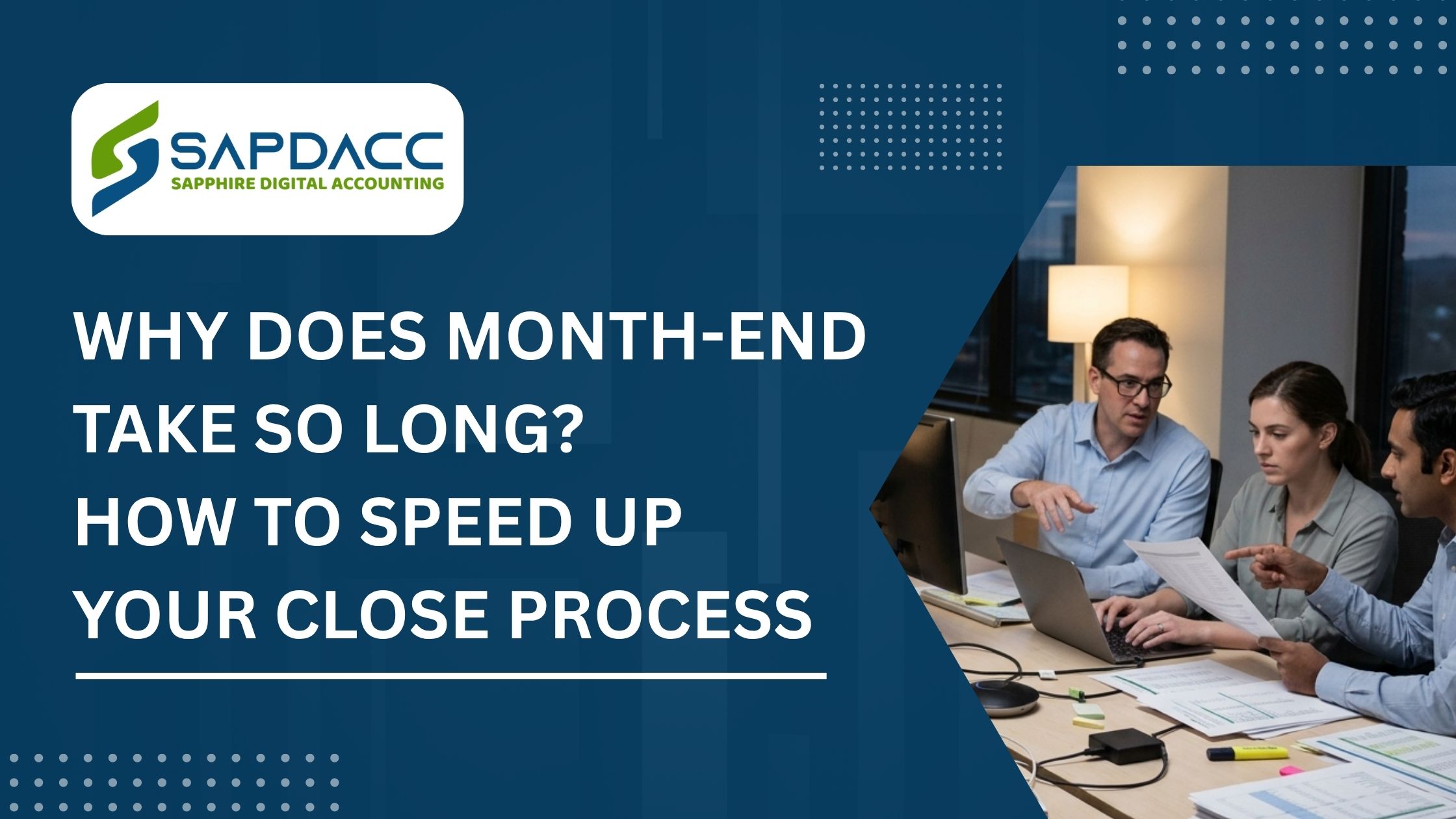
For many Australian business owners, month-end is dreaded before it even arrives. What should be a routine process — closing the books and producing reliable reports — turns into two or three weeks of overtime, chasing missing information, and fixing errors discovered too late.
If your month-end close consistently takes longer than it should, you're not alone, and more importantly, it's fixable. Here's why the close process drags on for so many SMEs, and what a faster, more reliable close actually looks like.
At its core, month-end close means reconciling accounts, reviewing transactions, correcting errors, and producing accurate financial reports for the period. Done well, it gives business owners a clear, trustworthy picture of performance shortly after the month ends — not weeks later.
When invoices, receipts, and bank statements are scattered across emails, folders, and paper files, simply gathering everything needed for close can eat up days before the real work even starts.
Bank and account reconciliations that are only done once a month mean errors, missing transactions, and mismatches all get discovered — and need fixing — at the busiest possible time.
Without a consistent, repeatable process, month-end becomes reactive. Steps get missed, redone, or completed out of order, adding time and increasing the risk of errors.
When approvals, missing information, or clarifications depend on several people across the business, the close process can stall for days at a time waiting on a single response.
Manually rebuilding reports in spreadsheets each month, rather than working from live, connected cloud accounting data, adds unnecessary hours and introduces room for manual error.
A drawn-out close doesn't just create stress for your finance team — it delays the information you need to make good decisions. Pricing, staffing, cash flow, and growth decisions all rely on knowing how the business is actually performing, and a close that takes weeks means you're often making those calls on outdated information. Over a full year, that's twelve separate windows where decisions are made with a blurred picture rather than a clear one.
A growing e-commerce business might have sales data in one platform, expenses tracked in another, and bank feeds only reconciled sporadically. Come month-end, the finance team spends the first week just pulling everything together, the second week chasing discrepancies, and by the time reports are ready, the business owner is already three weeks into the next month — reviewing numbers that are effectively history.
Businesses with a well-run close process typically have accurate reports ready within five to ten business days of month-end — sometimes faster. The difference isn't working longer hours; it's having consistent processes and current data throughout the month, so close becomes a final review rather than a scramble to catch up.
While every business is different, a reliable close process generally works through the same core steps, in the same order, every month:
Working through the same checklist each month — rather than starting from scratch — is one of the simplest ways to bring consistency and speed to your close.
For most SMEs, a well-run close should take five to ten business days. Anything consistently longer usually points to gaps in process, reconciliation timing, or system connectivity.
Yes — outsourced bookkeeping and reconciliation support means transactions are recorded and reconciled continuously throughout the month, rather than all at once, which is one of the biggest single factors in a faster close.
Absolutely. Faster, more reliable reporting means decisions about pricing, staffing, and cash flow are based on current information rather than data that's already a month old, which matters at any business size.
A soft close gives you an early, largely accurate view of performance just days after month-end, while a hard close reflects the fully reconciled, finalised figures. Many businesses use both — a soft close for quick decision-making, and a hard close for formal reporting and compliance.
Sapphire Digital Accounting helps Australian businesses streamline their month-end close through consistent, ongoing bookkeeping, reconciliations, and reporting — rather than a rushed scramble once a month. Working across leading cloud accounting and ERP platforms, we keep your financial data current throughout the month, so close becomes a quick, reliable final step rather than a multi-week project.
This sits alongside our broader accounts payable, accounts receivable, and financial reporting services, giving your business one consistent finance function rather than a patchwork of manual processes. For related reading, see our guide to bank reconciliation errors and how they contribute to a slow close.
In summary, a slow month-end close is almost always a process problem, not a people problem. With a clear checklist, continuous reconciliation, and the right support in place, most Australian SMEs can bring their close down from weeks to days — freeing up time and giving business owners far more current, useful information to work with.
Book a consultation with Sapphire Digital Accounting and let's streamline your close process.

Why Cash Flow Problems Happen Even in Profitable Australian Businesses
Read More →