The Hidden Cost:
The Hidden Cost of “Doing Finance Internally” for Australian SMEs
Read More →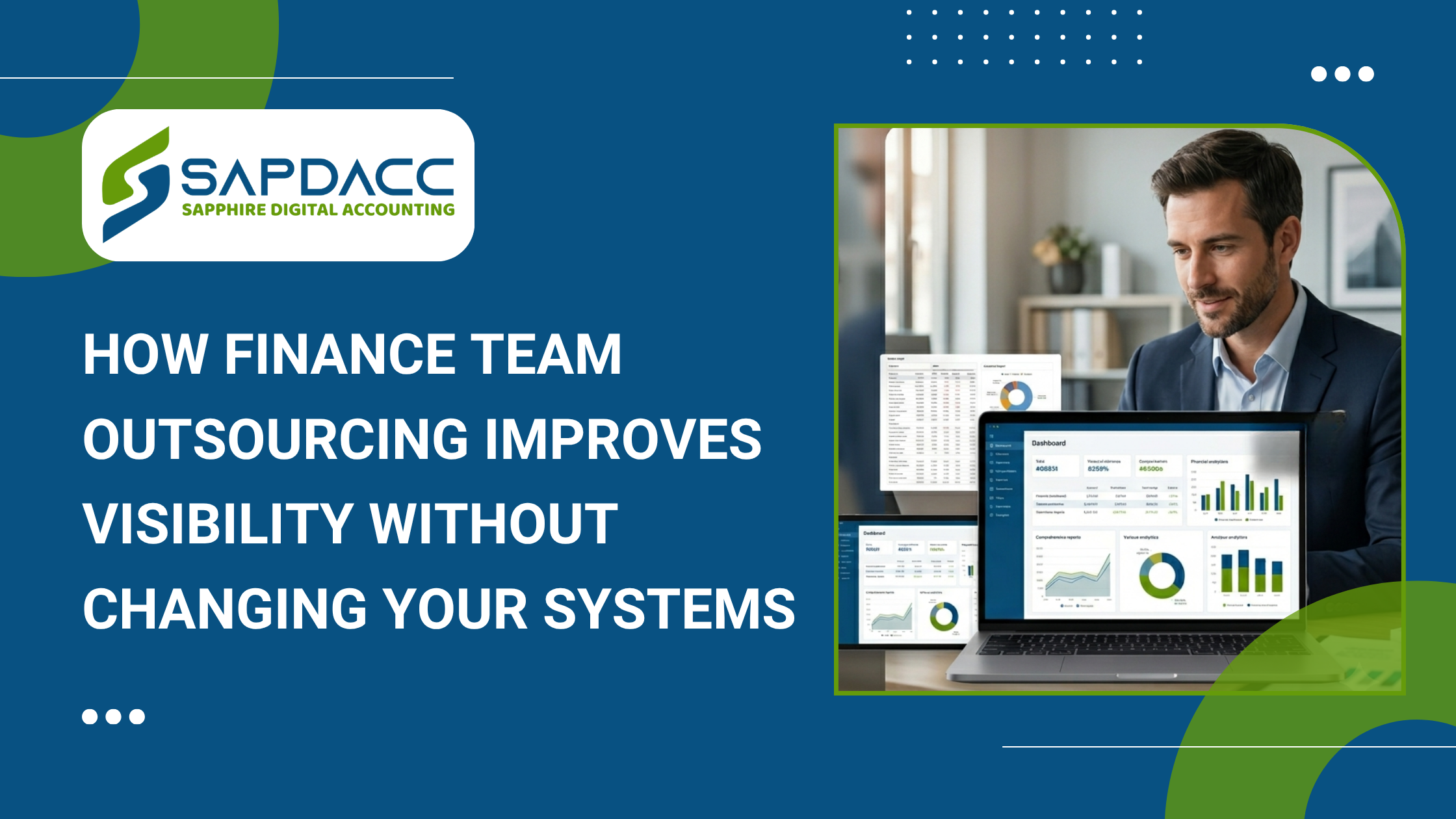
If you're a growing Australian business, you've likely heard the same advice: "upgrade your systems" or "implement a new ERP" to improve visibility. But most finance visibility issues don't start with software. They start with inconsistent execution—AR/AP delays, reconciliations slipping, and month-end close stretching out.
The good news is you can improve financial visibility significantly without changing your systems. The fastest path is often finance team outsourcing that works inside your existing environment and strengthens the finance rhythm.
Visibility breaks when the back office finance function falls behind
When the back office finance function is under pressure, reporting becomes late and numbers become harder to trust. Leaders see symptoms like:
Real-world impact for Australian SMEs and mid-sized businesses:
It's usually process and capacity—not the system
Most businesses don't lack visibility because their software is "bad." They lack visibility because the work feeding the system isn't consistent.
Invoices are processed in bursts. Reconciliations are delayed. Queries sit unresolved. The system holds data, but the data isn't current.
Disputes, missing documents, mismatches, and credits often sit in inboxes rather than a clear exception log. Without tracking, delays become normal.
A common pattern is one person holding the process in their head. When they're away—or when volume rises—visibility drops quickly.
More suppliers, more customers, more transactions, and more expectations for reporting. If processes don't scale, the system becomes a mirror of the problem.
Improve visibility by strengthening execution inside your current systems
A structured outsourcing model improves visibility by making your finance workflow consistent and measurable—while keeping your ERP and tools unchanged.
This is what effective finance function outsourcing and finance operation outsourcing looks like in practice:
What gets stabilised first
Where compliance readiness fits
When the ledger is current and reconciled, BAS and GST periods stop being a scramble. Many businesses choose to outsource ATO Accounting compliance tasks as part of broader outsourced accounting services, supported by cleaner documentation and stronger close readiness.
How this improves visibility without system change
If you need ongoing coverage, Accounting team outsourcing can provide continuity, and you can hire outsourcing Accounting team capacity without a long recruitment runway.
What improves when execution becomes consistent
A growing Australian business has a solid accounting system, but reporting is consistently late. AP approvals sit in inboxes, AR allocations fall behind, and reconciliations are left to month-end. The CFO spends time chasing clarity instead of reviewing performance.
By introducing a structured outsourced team to stabilise AP processing, AR follow-ups, reconciliations, and exception tracking, the business improves cash visibility and shortens month-end reporting turnaround—without changing systems or implementing new software.
Sapphire Digital Accounting supports Australian SMEs and mid-sized businesses as an outsourced operational finance partner. We work inside your existing systems to strengthen AR/AP delivery, reconciliations, reporting readiness, and scalable finance execution—so visibility improves without disruption.
Our focus is practical: cleaner inputs, predictable workflows, and reporting that leaders can trust.
You don't always need new systems to gain better visibility. In many Australian businesses, visibility improves when finance execution becomes consistent: AR/AP stays current, reconciliations become routine, exceptions are tracked, and month-end reporting follows a repeatable cadence.
A structured outsourcing model can deliver that rhythm—without changing your ERP, disrupting operations, or losing control.
Book a consultation or speak to a finance expert to review your current finance setup. We'll help you identify where visibility is breaking down and map a practical outsourcing approach that works inside your existing systems.
If reporting is always “a few days away”, it’s rarely a reporting issue.
Read More →
If your business is growing, your invoice volume usually grows even faster. More suppliers, more approvals, more customer billing, more exceptions.
Read More →