The Hidden Cost:
The Hidden Cost of “Doing Finance Internally” for Australian SMEs
Read More →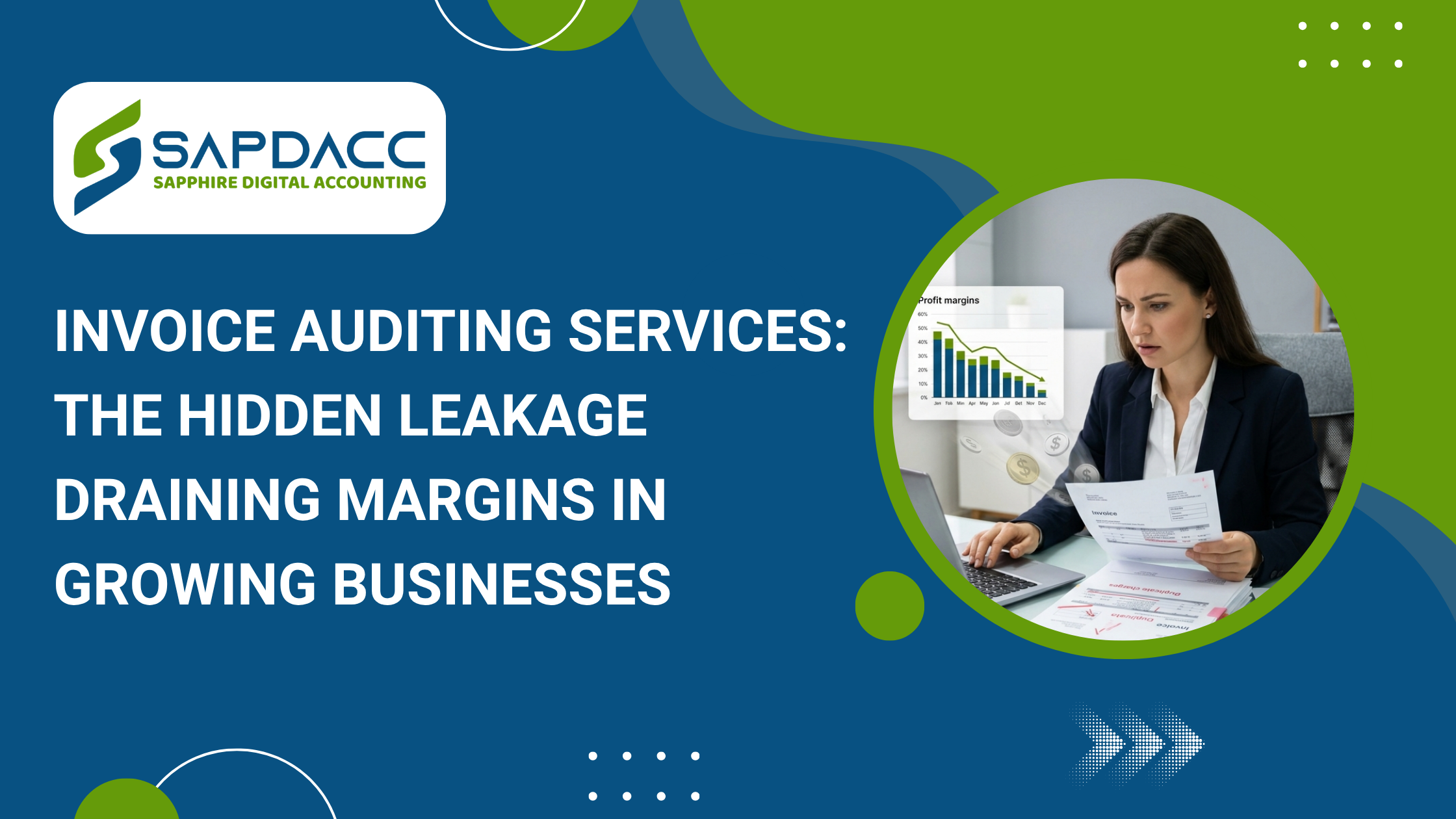
If your business is growing, your invoice volume usually grows even faster. More suppliers, more approvals, more customer billing, more exceptions. And somewhere in that volume, small invoice errors start slipping through.
They rarely look dramatic. A duplicate supplier invoice. A mismatch between a purchase order and an invoice. A credit not processed. A pricing error on a customer invoice. Over time, these "small" issues quietly drain margin and create avoidable cash flow pressure—especially for Australian SMEs and mid-sized businesses running lean finance teams.
Invoice leakage doesn't show up until it hurts
Invoice leakage is money leaving your business (or not coming in) due to avoidable errors and weak controls. It often sits inside the back office finance function, where processing speed is prioritised over verification.
Common forms of leakage in growing businesses include:
The real-world impact:
Leakage increases when volume grows faster than structure
Invoice leakage isn't usually caused by poor intent. It's caused by growth outpacing controls.
When teams are under pressure, the focus shifts to "getting invoices through" rather than validating them. That's when duplicates, mismatches, and missing approvals slip into payment runs.
Email approvals, missing attachments, and unclear audit trails create gaps. Even when people are doing the right thing, the workflow isn't built for reliability.
As businesses add suppliers, entities, locations, or ERPs, the probability of mismatches and coding errors increases. For trading businesses, inventory and order processing adds another layer where timing and documentation matter.
Aged queries, unresolved disputes, and missing credits often sit outside a clear exception log. Over time, the business loses money simply because no one can see what's stuck.
Many Australian SMEs rely on one finance person to catch errors. Leave or turnover increases leakage risk immediately.
Fix leakage by building invoice controls into your workflow
The solution is not "slow everything down." It's to introduce consistent checks, clear exception handling, and better documentation discipline—so invoice accuracy improves without creating bottlenecks.
This is where invoice auditing services become a practical operational finance control. When delivered consistently, invoice auditing helps validate invoices before payment or issue, and creates visibility over what's missing or mismatched.
Where outsourcing fits (structured, not task-based)
For many growing Australian businesses, outsourcing improves invoice controls because it adds capacity and a repeatable process.
A structured outsourcing approach can include:
The goal is simple: reduce preventable leakage while improving clarity and control.
What you gain when invoice controls are consistent
A growing Australian business adds new suppliers and increases purchasing volume. AP processing becomes rushed, approvals are handled by email, and disputes are frequent. Month-end reporting starts showing unexpected cost spikes.
By introducing invoice auditing checks (duplicates, PO matching, approvals and documentation verification) and tracking exceptions in a consistent workflow, the business reduces rework and leakage. Payables become cleaner, reporting becomes more reliable, and month-end stops being a clean-up cycle.
Sapphire Digital Accounting supports Australian businesses as an outsourced operational finance partner. We help strengthen invoice controls and processing discipline as part of broader outsourced accounting services—including AP support, AR/AP workflows, reconciliations, reporting readiness, and scalable team coverage.
Our focus is practical: reduce leakage, improve clarity, and keep finance workflows predictable as the business grows.
Invoice leakage is rarely one big mistake. It's a series of small issues that accumulate as your business scales—especially when invoice volume grows faster than controls and process discipline.
The fix is straightforward: build consistent invoice checks, tighten documentation and approvals workflows, and track exceptions clearly. For many Australian SMEs, structured outsourcing is a practical way to implement those controls without adding internal complexity.
Book a consultation or speak to a finance expert to review your invoice workflow. We'll help you identify the gaps, reduce avoidable leakage, and build a more reliable invoice process that supports growth.
If reporting is always “a few days away”, it’s rarely a reporting issue.
Read More →
If you’re a growing Australian business, you’ve likely heard the same advice..
Read More →